SWAN - Save Westhoughton Act Now
Westhoughton images

email SWAN class="mail" title="Drop SWAN a line">Contact

LDF (Local Development Framework)

What is the LDF (Local Development Framework) Core Strategy?

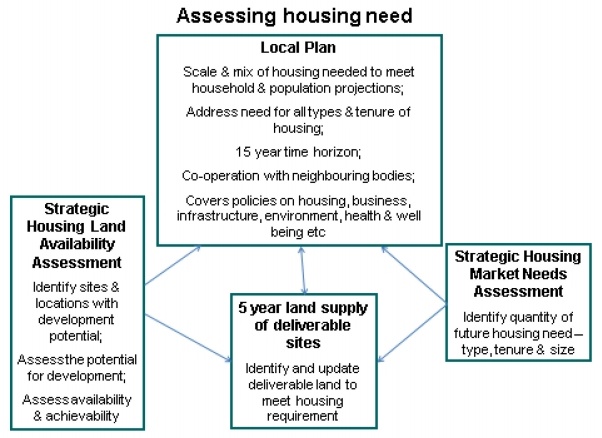
This is the framework in which there is a key document called the Core Strategy, this describes what Bolton will to look like in the future up to 2026, and the planning policies that will be used to make it a reality.

During the consultation process, which took place during 2008 and 2009, local groups such as S.W.A.N. were allowed to contribute to the discussion to help form this statutory policy.

In September and October 2010 this strategy was examined for soundness by a government inspection and S.W.A.N. had representatives at discussions relevant to Westhoughton, namely the ‘M61 Corridor' (matter 6) and 'Employment' (matter 3). During the examination of ‘matter 2’ (Housing), developers questioned the proposals for Westhoughton, stating that if housing development was not allowed for in Westhoughton, and specifically without building on ‘protected open land’ (POL) such as Lee Hall and Bowlands Hey, Bolton could not meet housing targets. The developers suggesting that this land was safeguarded for housing development under the 1972 Westhoughton Master Plan - which we believe is no longer relevant. As a result the Planning Inspector deemed it necessary to discuss Westhoughton (as a separate 'matter 7') and an additional session.

Many were not aware of this or its implications, fortunately, S.W.A.N. with their remit to keep a watchful eye on planning developments, were on the case and, asking to be present, participated fully in these round table discussions. The only other participants were three members of Bolton Council Planning Department, and representatives of three developers seeking to build on these valuable sites.

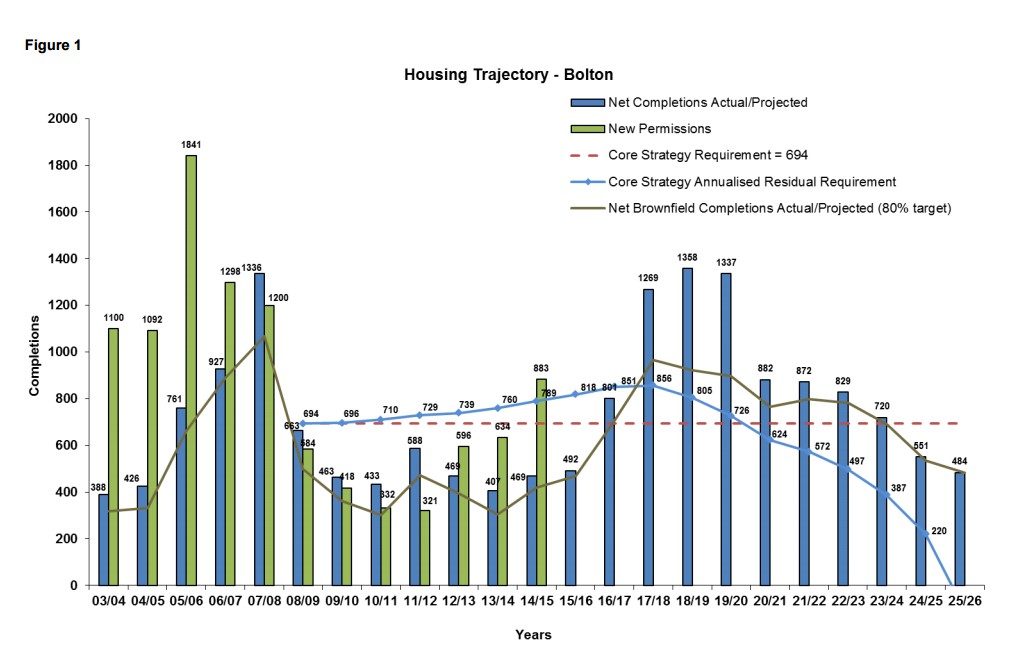
Persimmon Homes, represented by a Planning Consultancy, wished to build 1500 dwellings on protected open land at Lee Hall, they argued that the council had a shortage of housing sites on brownfield. Over recent years, in order to help regeneration, brownfield sites (previously developed land) have been the preferred option for housing development, having an 80% target quota. Greenfield sites, they also claimed, can support greater numbers of ‘affordable’ housing. Persimmon continued to quote the ‘irrelevant’ 1972 Master Plan as a reason for opening up this parcel of land. In support of their argument Persimmon stated that that the Lee Hall site does not have high environmental value – which would come as a surprise to local residents.

Bellway, who have been a significant presence in Westhoughton over the last decade, and represented by their own team, were proposing 700 dwellings on protected open land at Bowlands Hey. Once a piece of land is opened up, the likelihood of more development is greater, as developers can chip away at these areas.

Having met, discussed and debated the issues, S.W.A.N.’s position was that having been key in gaining protected open land status for these areas in 2002, we did not wish to see them compromised, given the development that had come to Westhoughton over the previous decades and the evident problems with infrastructure and services. By allowing greenfield development, regeneration of brownfield sites would not take place leading to further decline in these areas.

This was a view that Bolton Council Planning Dept. were coming round to since consultations had taken place, e.g., at the Area Forums… and S.W.A.N.’s ongoing involvement in planning matters: "Consultation on the early stages of the Core Strategy shows that residents are concerned that the provision of infrastructure has not kept pace with housing development in Westhoughton, including lack of transport provision resulting in congestion."


Review of Matter 7 - 'Bolton Council Core Strategy Examination'

Hearing Notes from meeting of 14th October, 2010

Present at Round Table discussion:

  • Richard Hollox (RH) - Planning Inspector
  • Simon Godley (SG) - Bolton Council
  • Tim Hill (TH) - Bolton Council
  • Andrew Chalmers (AC) - Bolton Council
  • Paul Tunstall (PT) - JWPC
  • Paul Williams (PW) - Mosaic Town Planning
  • Simon Artiss (SA) - Bellway Homes
  • Ruth Duckworth (RD) - S.W.A.N.

[7.4] Are the proposals for Westhoughton justified?

Bolton Council having carried out extensive consultation with residents in Westhoughton, were concerned that the provision of infrastructure had not kept pace with housing development, including lack of transport provision which had resulted in congestion. They justified their proposals to protect open land for Westhoughton on this basis – Westhoughton had borne the brunt of Bolton's development in recent decades and was now struggling to cope.

S.W.A.N. (RD) confirmed that Westhoughton’s problems dated back to the Westhoughton Master Plan devised by Lancashire County Council in 1972. This plan involved the expansion of the town from a population of 17,500 to 40,000. A number of housing sites were designated including Lee Hall and Bowlands Hey. Two new principal roads were to be built, one on the east side, and the other to the north west to link the M6 and the M61 - these would take away through traffic. 14 primary schools and 3 secondary schools were to be built to accommodate the population. Unlike New Towns of that era, no mechanism was put in place to ensure that this infrastructure was created at the same time as the housing (i.e., a planned approach). By 2001 the population had reached 25,000 (and increase of 3,186 households from a 7,000 base), however, the eastern road had become the proposed ill-fated A5225 (M6 to M61 Wigan-Hindley-Westhoughton bypass), the north west principal road disappeared from plans. Only a short bypass (Cricketers Way) had been created to relieve the pressure on the town centre. Thus Westhoughton had had a lot of development but the infrastructure never materialised.

There is still only one secondary school and plans to build others have been abandoned (The Hoskers); the rebuilding of the existing Westhoughton High School were cancelled in 2010. There are currently 7 primary schools which are oversubscribed; 1 primary school closed prematurely.

Health and medical services are stretched, and 'Section 106' money from the Metal Box Housing developments to provide a new doctors surgery has never appeared – the PCT (Primary Care Trust) could not afford to run and maintain it. 'Section 106' money is money developers are obliged to give councils to help with minor infrastructure improvements around new developments.

Westhoughton has recently acquired a Sainsbury’s supermarket and a Lidl to help to meet existing shopping needs, which had been inadequate for some time. Bolton Council’s retail study (2010) had identified this need and indicated that there was still a shortfall of provision for existing residents. The developers maintain that if they were allowed to develop, they could release opportunities for planning gains that would deliver new infrastructure: S.W.A.N.’s view that developer money would not deliver sufficient major infrastructure needed for a town of this size. Section 106 money would only tinker round the edges providing cosmetic improvements but actually creating more problems (congestion, pressure on services). There was a suggestion from the developers that improved retail facilities now exceeded Westhoughton’s needs and could justify more development; however, the recent Council Retail Study showed retail was still lacking in Westhoughton to serve the existing population level. Sainsbury’s and Lidl merely address previously identified needs.

The developers also saw fit to suggest that past development allocations were relevant to future allocations - the linear approach - regardless of need, capacity and wishes of local people. This was rebuffed by Bolton Council, who thanks to S.W.A.N. are more aware of planning issues relating to the overdevelopment of the past few decades.

The developers had queried residents’ opinions on development stating that facts were more important than opinions, after all this is what 'residents would say!' This of course, ignores how well informed residents who take an interest in the their area and who live here can be.

At the end of the discussion, Tim Hill, Director of Planning, stated that if the Inspector considered allowing land release for development to be acceptable, such a change would represent a fundamental departure from the overall strategy, and the inspector would have no option but to find the entire strategy unsound.

The role of the Inspector was to listen to the arguments and come to a conclusion as to whether the proposals were sound.

In December 2011, the Inspector’s Report was published and concluded:

"No major change is proposed for Westhoughton, and so the Green Belt and Protected Open Land around the town will be retained. Any development on this open land would contravene national and local policies for its protection. and would undermine sound spatial strategy. This approach accords with the views of local residents who consider that development in the town has outstripped the infrastructure upon which it relies.”

Comment:

S.W.A.N. was pleased to be in a position to provide the evidence to help produce an LDF Strategy with which residents of Westhoughton can be pleased.

  • There has been overdevelopment in Westhoughton.
  • Existing infrastructure and services barely supports the existing population.
  • The outcome of this report means that Westhoughton can catch its breath in terms of the relentless development of recent years.
  • The confirmed 'Protected Open Land' status of Lee Hall, Bowlands Hey and Ditchers Farms means that, while developers will still try to develop, they will find it very difficult to obtain permission without very good reason in the period up to 2026. This assumes that government guidelines do not alter significantly and that the voice of groups such as S.W.A.N. remains strong and informed.

Further reading

S.W.A.N. is a group concerned about planning developments in the Westhoughton area.

Due to its location, the availability of land and the ease of getting applications approved, Westhoughton has been favoured area for developers and has borne the brunt of house building within the borough, doubling in size over recent decades.

Such development has changed the character of the town and has impacted on the area in terms of infrastructure and quality of life. There has to be a balance, and development should not only adhere to stated statutory planning policy, but should fit with the needs and desires of the local community.

Formed by local residents, S.W.A.N. has developed expertise in planning law and has sought to represent residents, influence debate and policy, and where necessary oppose inappropriate development.

There have been successes, in particular the establishement of three areas of 'protected open land' around Westhoughton, however, in spite of the lull brought about by the recent recession, we remain vigilant, our mission to: To defend areas of protected open land, and to keep a watching brief over planning issues that affect Westhoughton – and thus its impact upon 'Green Spaces', 'Environment', 'Traffic & Infrastructure' and 'Amenities'.

Planning Updates

Planning Applications

  • For greater detail visit
    Planning Search (Bolton Council) and enter the 'Ref Number'.
  • Of note…
  • Application: Glebe Mill, Library Street (BL5 3DG) - Outline application for demolition of exisitng mill building and erection of 3, 4 and 5-storey buildings. 54 retirement apartments, 12 cottages, 53-bedroom Care Home. Plus parking. Ref: 86502/11.

  • We are currently looking for a volunteer to help with the local planning review, perhaps as part of an educational project. Drop us a line if interested.